
Last updated November 25, 2026
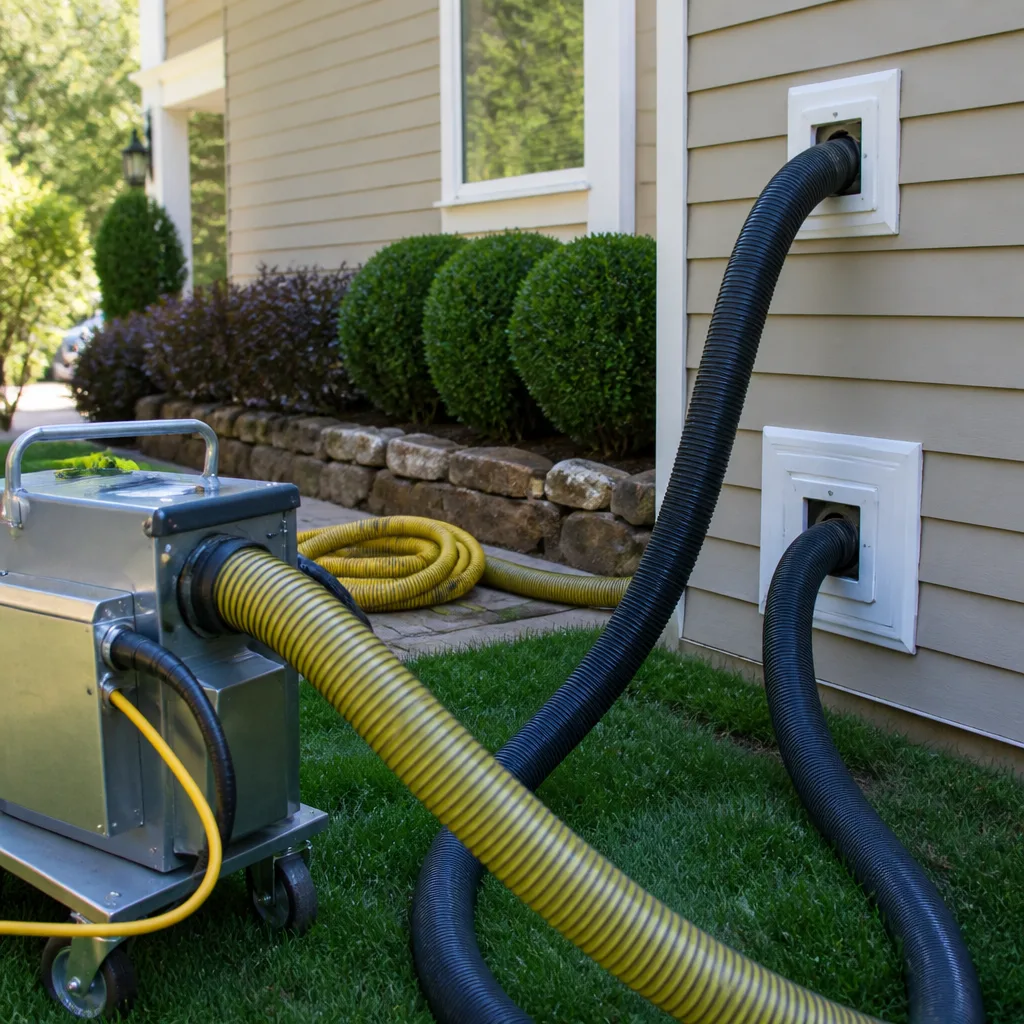 Whole-home duct cleaning
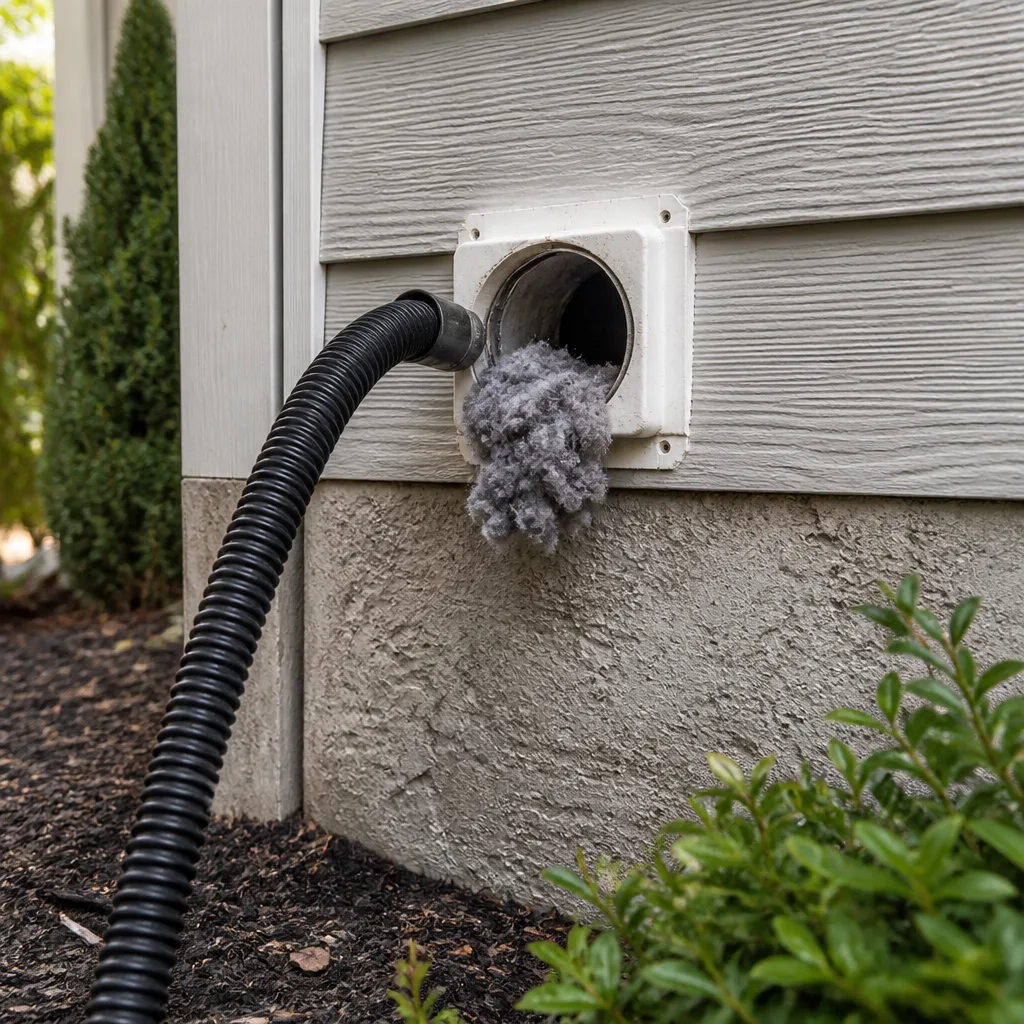 Dryer vent cleaning
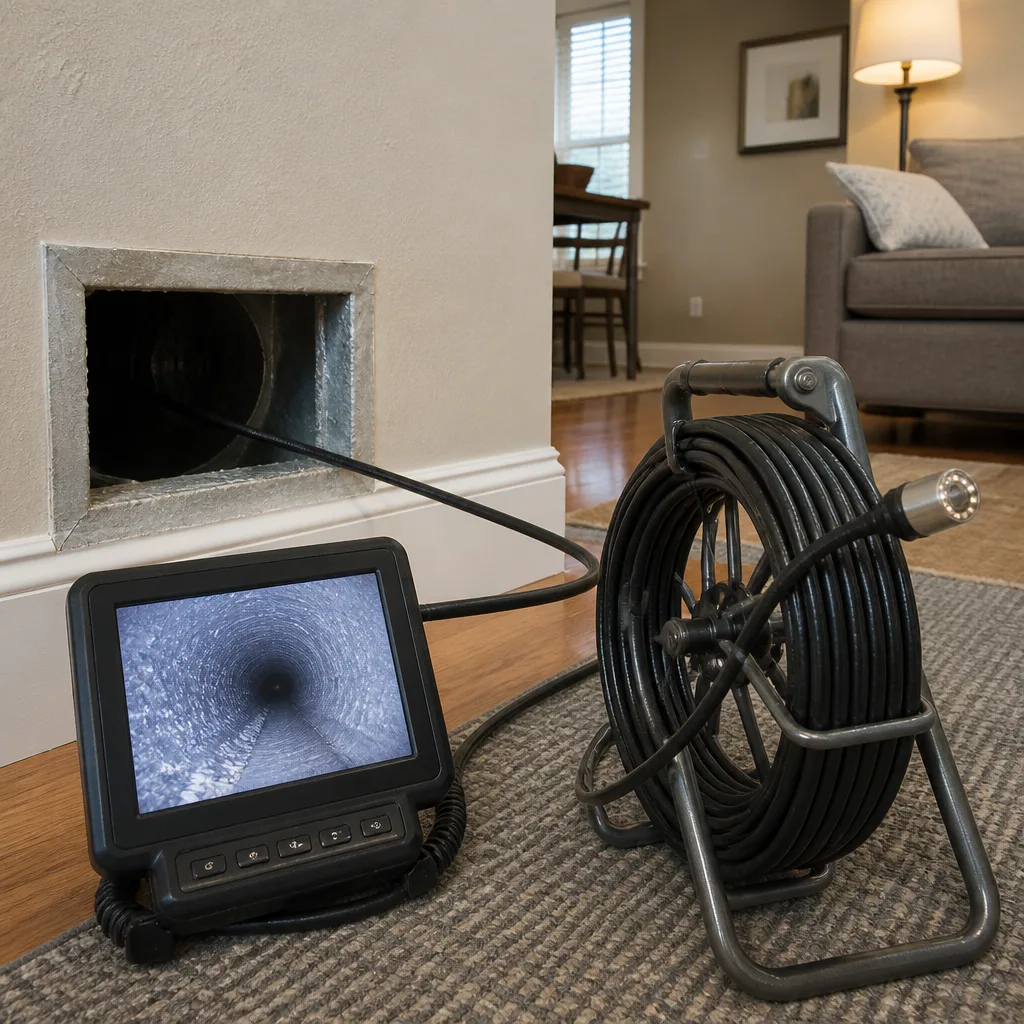 Camera inspection
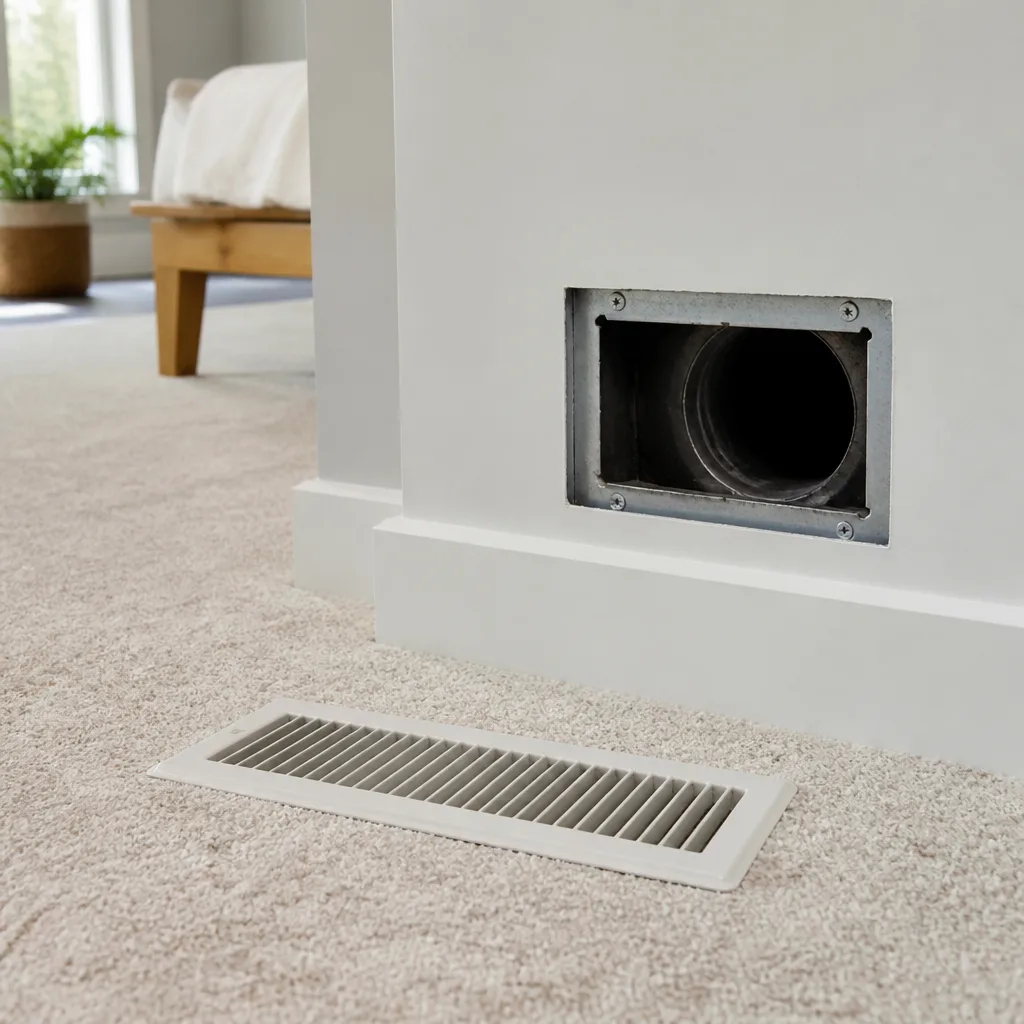 Sanitizing & deodorizing
Whole-system duct and dryer vent check with before-and-after photos - you see exactly what came out of your vents
That "$99 whole-house special" is a bait ad - the real number appears once they are in your hallway, or the "clean" is a shop-vac at the register. We photograph the inside of your ducts before and after instead.
How to Hire an Air Duct Cleaning Contractor in Kingwood: A Step-by-Step Guide
A legitimate truck-mounted duct cleaning unit costs more than many cars. So when a flyer lands in your mailbox offering a whole-house cleaning for the price of dinner, the honest question isn’t whether it’s a bargain. It’s what equipment that number can possibly support. Kingwood sits in one of the most active duct cleaning markets in Texas, and the gap between a real specialist and a coupon-flyer crew has never been wider. This guide walks you through equipment verification, scope documentation, credential checks, and insurance minimums. By the end, you’ll know exactly how to hire an air duct cleaning contractor in Kingwood without getting taken.
Quick Answer
Hiring an air duct cleaning contractor in Kingwood comes down to four checks: verify the equipment is professional-grade (Rotobrush, Nikro, or a truck-mounted vacuum), get a written scope of work with line items before the visit, confirm the crew uses source containment and performs post-job verification, and ask for proof of general liability insurance and references. Only then compare prices, because equipment and scope determine the price far more than any coupon does.
Styles & brands we work with
- Whole-home duct cleaning
- Dryer vent cleaning
- Camera inspection
- Sanitizing & deodorizing
Table of Contents
- Why the Kingwood Duct Cleaning Market Is Unusually Risky
- The Four Questions That Expose an Under-Equipped Operator
- What NADCA Membership Actually Certifies (And What It Doesn’t)
- How to Read a Written Scope of Work
- How the Classic Bait-and-Switch Duct Scam Works
- Insurance and Liability Minimums for Texas HVAC Work
- The Equipment You Should Expect to See
- Red Flags and Deal-Breakers
Why the Kingwood Duct Cleaning Market Is Unusually Risky
Kingwood’s housing stock spans several decades of construction, from the older custom homes near the river to newer developments off Kingwood Drive and Northpark. The climate matters too. Houston-area humidity is relentless, and that moisture load drives mold and biological growth inside ductwork in a way dry climates simply don’t. A crew that vacuums surface dust and calls it done leaves the actual problem – the spores, the microbial film on the insulation, the allergens bound to the duct walls – untouched. So does a crew that uses a shop vac and a hose.
What’s aggravated this locally is competition. Greater Houston has more duct cleaning providers per household than most Texas markets, and the advertising arms race favors whoever can post the loudest teaser number. That pushes honest operators into a hard spot: either explain why their scope is different, or watch the customer book the cheapest call.
We’ve watched this pattern for years. The homeowner calls the cheap number, the technician arrives, opens a vent, and within minutes produces a problem the flyer never mentioned: cracked flex duct, a collapsed run, mold growth, or “the unit needs an antimicrobial fog plus a motorized brush treatment and that’s another several hundred dollars.” The original quote is now meaningless. The homeowner is either paying the upcharge or being treated as if they’ve wasted the technician’s time. Neither outcome is acceptable.
Kingwood homeowners who care what their family actually breathes – allergy sufferers, pet owners, parents of young children, families who’ve just bought or renovated a house – are exactly the customers who get targeted by this pattern. They’re the ones who take the ad seriously. This guide is written for them.
The Four Questions That Expose an Under-Equipped Operator
Four questions will tell you almost everything about a duct cleaning contractor’s actual capability. Ask them on the phone, before anyone visits. Any real specialist answers them without hesitation. A crew that can’t will stumble or redirect.
- What’s the CFM rating of your vacuum, and is it truck-mounted or portable? A true truck-mounted unit reaches well past 10,000 CFM at the inlet. Portable machines on a good day hit 2,000 to 4,000. If the operator can’t quote the number, the “vacuum” is likely a shop vac in a van, and it will stir up more than it removes.
- What kind of brush system do you use? Ask specifically about a rotating brush or whip system – the tools designed to actually break debris off the duct wall. A hose alone doesn’t. Rotobrush and Nikro are two of the industry-standard names to listen for. If the answer is vague, they don’t own one.
- How do you contain the source during cleaning? Source containment means sealing the supply registers and using negative pressure at the vacuum connection so dust never enters the living space. “We just cover the vents with plastic” is a red flag. Abatement Technologies containment setups are the benchmark for contamination-level jobs.
- What’s your post-job verification process? The correct answer includes an in-duct camera inspection and before-and-after photos of that homeowner’s own ducts. No photos, no proof. You should be able to look at your ducts after the visit and see the difference.
An operator who can answer all four and show you the documentation is a specialist. A company that mumbles through any one of them is what this guide exists to help you avoid.
What NADCA Membership Actually Certifies (And What It Doesn’t)
NADCA – the National Air Duct Cleaners Association – publishes the industry’s consensus standard for how duct cleaning should be done. Membership in the association, and particularly the ASCS credential (Air Systems Cleaning Specialist), signals that the company has invested in direct training on source removal, containment, and post-cleaning verification. That’s worth something. It’s not the whole story.
Here’s how to actually use the registry:
- Search the NADCA member directory for the company name and confirm the entity matches what’s on the contract. Van names and phone numbers get recycled; business entities don’t.
- Ask whether the person on-site is ASCS-certified, not just the office. Certifications live with individuals, and the crew that arrives is the one that matters.
- Don’t treat NADCA as a license. It’s an association with a voluntary standard, not a state regulator. Plenty of honest, capable operators are not members. Plenty of members have underwhelming equipment.
- Use it as a filter, not a verdict. Membership plus the four equipment questions plus a written scope is what actually separates specialists from flyers.
In a market like Kingwood’s, where advertising pressure is high, NADCA membership is a useful tiebreaker between two real providers. It’s not a substitute for confirming the truck-mounted vacuum, the brush system, and the written scope. Equipment tells you what the company can actually do. NADCA tells you they’ve taken the standard seriously enough to train against it.
How to Read a Written Scope of Work
A written scope of work is the single most powerful piece of protection a homeowner has. Real providers give you one before the visit. If the answer to “can you send the scope in writing” is “we’ll go over it when we arrive,” you don’t have a quote – you have a bait price and a phone number.
A proper scope for an air duct cleaning visit in Kingwood should include these line items:
- Number of supply and return vents to be cleaned, listed on the scope, not estimated on-site.
- Cleaning method per component – which tool is used at the trunk line, at the branch runs, at the air handler.
- Source containment approach – how the registers are sealed and how negative pressure is maintained.
- Air handler and coil cleaning included or not – this isn’t a duct-cleaning line item at every company. It should be stated either way.
- Sanitizing and antimicrobial treatment, listed separately and clearly priced.
- Before-and-after photo documentation, delivered to the homeowner.
- Duct repair and sealing, called out if needed – cracked, disconnected, or unsealed seams re-contaminate a clean system fast.
- Total price and payment terms, in writing, before the visit.
Omissions that are deal-breakers: no vent count, no containment description, no post-job verification language, no clear statement of whether the air handler is included, and any quote that’s phrased as a headcount (“per vent,” “per opening,” “per run”) rather than one flat price per system. Per-vent pricing is how the bait gets set. It’s the mechanism that lets a quote grow by hundreds of dollars on the drive over.
We give a flat price per system, in writing, before any work starts. That’s the standard. Ask for it from whoever you hire.
How the Classic Bait-and-Switch Duct Scam Works
The bait-and-switch doesn’t start on your driveway. It starts with a flyer, a search ad, or a robocall, and it follows a pattern homeowners in Kingwood see year after year. Knowing the mechanics makes it nearly impossible to fall for.
- The teaser quote. A number that is mathematically impossible for a legitimate truck-mounted cleaning operation – the number you might get for one vent, or a heavily “discounted” whole-house figure that expires today. It’s not a starting price. It’s a reservation.
- The urgency close. “We’re in your neighborhood today,” “we have an opening at 2pm only,” “the price goes up tomorrow.” The goal is to stop you from comparison shopping or reading the actual scope.
- The on-site upsell. Once the technician is in the home, they open a register and produce a “discovery” – the mold, the collapse, the “you wouldn’t believe what we found in there.” The price triples. The customer is now in a position where refusing means the visit feels wasted, and the technician becomes visibly unhappy.
- The high-pressure close. The upcharge is quoted higher than it should be, then “discounted” on the spot if you sign right then. The technician has decided the price based on what they think you’ll pay, not what the job costs.
- The shortcuts. What actually gets done is a light vacuum at the registers, no source containment, no brush system, no camera inspection, and a written receipt with no line items on it. The photos the homeowner was promised never appear.
- The follow-up call. Weeks later, a “courtesy” call to schedule the next cleaning – which, oddly, is the most profitable thing the company does.
Every one of those steps is avoidable if you require the written scope, the four equipment answers, and independent proof of insurance before the visit. Great real specialists won’t be surprised. Some will welcome it.
Insurance and Liability Minimums for Texas HVAC Work
Texas doesn’t issue a single statewide “duct cleaning contractor” license the way it licenses electricians or plumbers. The work is treated as part of HVAC service, which means the licensing and insurance expectations fall on the business entity itself, and the risk falls on you if something goes wrong.
Here’s what a Kingwood homeowner is exposed to if an uninsured contractor damages ductwork:
- Collateral damage to the system. A damaged trunk line, a cracked flex run, or a collapsed return can cost hundreds to thousands of dollars to repair, and none of that is covered if the contractor has no general liability insurance. You’d be filing with your own homeowner’s policy, which often excludes contractor-caused damage done without proper coverage.
- Interior damage from improper containment. A duct cleaning that isn’t properly contained can push debris, insulation fibers, and mold spores into living spaces. Remediation on the interior side is costly, and the contractor walks away if they’re not insured.
- Injury on your property. If a technician is injured on the job and the contractor has no workers’ compensation coverage, your homeowner’s policy can become the target of a claim.
- Re-contamination and re-work. A company with no insurance has no reason to make it right. You pay twice.
Minimum checks to run before you hire anyone in Kingwood:
- Ask for the company’s certificate of general liability insurance, with the business entity name matching the contract.
- Confirm that the coverage is active rather than expired. A certificate is easy to print; an active policy requires a call from your agent to their agent.
- Ask whether they carry workers’ compensation (or a valid state exemption, if they don’t).
- Ask whether the crew carries their own coverage or whether coverage extends only to the business entity.
“State-licensed” is not a phrase that reliably applies to duct cleaning in Texas, so ask for the insurance documents directly. A vetted local professional should be licensed and insured as their state requires, and should have no trouble sending that paperwork before the visit.
The Equipment You Should Expect to See
Recognizing professional equipment on arrival is easier than it sounds. If the crew shows up with a shop vac and a hand-held hose, the answer is already clear. A real specialist arrives with equipment built for the job.
- Rotobrush or Nikro systems. These are the industry-standard tools for residential duct cleaning. Rotobrush uses a spinning brush and air whip to break debris off the duct wall inside a containment sleeve. Nikro brings heavier-duty suction and air-moving capability for deeper contamination. Both are used by certified HVAC and indoor air quality specialists nationwide.
- Abatement Technologies equipment. When contamination goes beyond routine dust – visible mold, post-construction debris, allergens – the setup needs the HEPA filtration and negative air capacity Abatement Technologies gear provides. If a company claims to handle mold and can’t name the containment equipment, they don’t handle mold.
- Truck-mounted or high-capacity vacuum. CFM at the source matters. A vacuum that can’t generate real negative pressure at the register simply stirs dust instead of removing it.
- In-duct inspection camera. Before-and-after photos require an actual camera, not a phone held up to an open vent. Ask to see the footage.
- Honeywell and Aprilaire air quality systems. If your home needs filtration, humidity control, or purification upgrades, a specialist who is authorized to recommend and install those whole-home systems can address the problem in the same visit rather than sending you to another vendor. Kingwood’s humidity makes humidity control a legitimate part of the conversation, not a hard sell.
- Duct sealing materials and tools. Cleaning is only half the job. Cracked, disconnected, and unsealed duct runs let the debris back in and bleed your conditioned air out. Sealing is how a specialist fixes the system rather than just treating the symptom.
Ask what they’ll bring. The list you hear should match this one, roughly. If it doesn’t, you’ve learned something valuable in under five minutes.
For the HVAC side of the visit, our HVAC cleaning covers the air handler and coil. For duct repair and sealing, the same crew handles it because it’s the same system. And for dryer vents, dryer vent cleaning is a fire-safety service, not a comfort upgrade – lint buildup is a leading cause of residential house fires. If your dryer runs hot or the clothes take forever to dry, that’s a safety signal.
Red Flags and Deal-Breakers
Some red flags are common sense. Others are specific to duct cleaning, and a homeowner with no prior experience can easily miss them. Here’s the list to hold onto during the call.
- A quote given without a vent count. No real provider can price a whole-house cleaning without knowing how many supply and return vents the home has.
- No written scope before the visit. If it isn’t in writing, it doesn’t exist.
- A teaser number that’s implausible for the equipment described. Truck-mounted rigs and professional-grade tools aren’t free.
- “Per vent” or “per opening” pricing. One flat price per system is the standard. Per-vent pricing is the mechanism of the upsell.
- No camera, no photos. Before-and-after documentation of your ducts is the baseline. Without it, you have no proof anything was done.
- High-pressure urgency. Real specialists schedule work on their calendar. They don’t need to close you today.
- A technician who can’t name the equipment. If they don’t know their own vacuum’s model, they don’t own it.
- No insurance documents available on request. Active coverage is a phone call to the agent, not a verbal promise.
Each of these on its own is worth a question. Two together means you keep looking.
Common Mistakes to Avoid
- Booking on price alone. The lowest bid in Kingwood is statistically the highest-risk hire because the price point determines the equipment, the training, and the shortcuts – not the other way around.
- Accepting a verbal quote with no scope. Verbal quotes are the foundation of every legitimate dispute in the trade. Insist on writing, and hold the company to it.
- Skipping the equipment questions. The four questions take two minutes and save hours of headaches. Homeowners who skip them are the ones the call center scripts are written for.
- Assuming a “truck” at the curb means a truck-mounted vacuum. Vans and pickups are common on every job. What matters is what’s inside – the CFM, the brush system, the containment gear.
- Letting the technician “find” a problem and immediately pricing it. A real specialist documents findings with photos and a written scope; an upsell happens on the spot with a number pulled from the air.
- Forgetting the dryer vent while you’re at it. A homeowner paying for duct cleaning should get the dryer vent checked in the same visit. It’s the fire-safety service in the house.
- Not verifying insurance before the visit. Paperwork checked after damage has been done is worth what you paid to check it – nothing.
See the difference
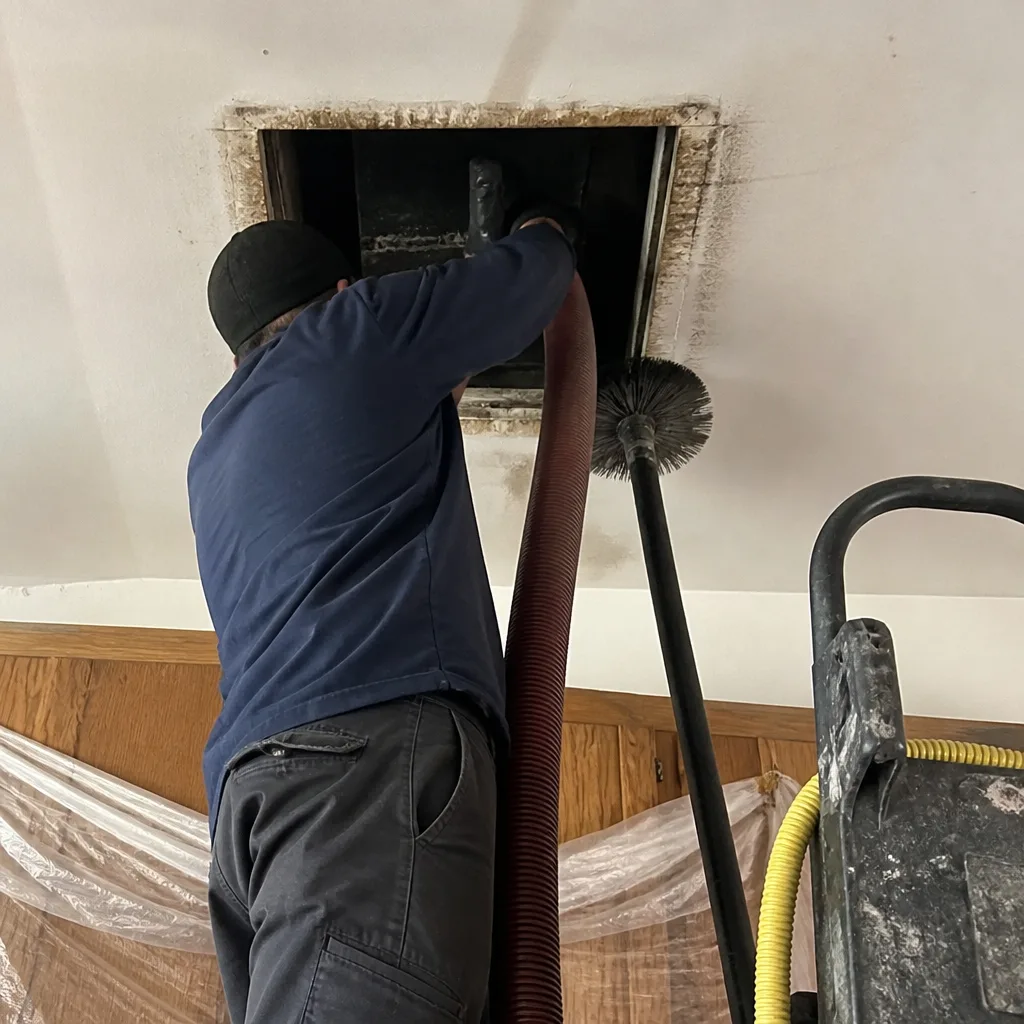 Before
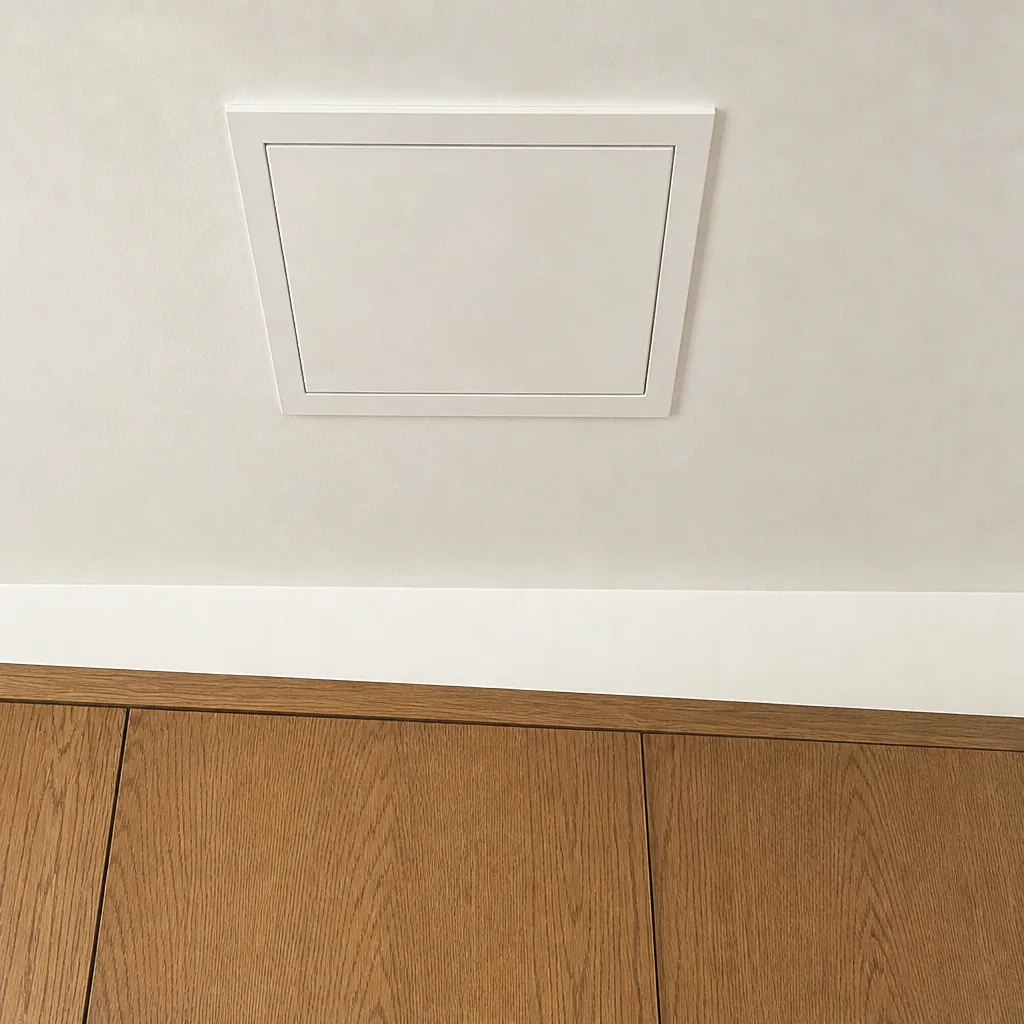 After
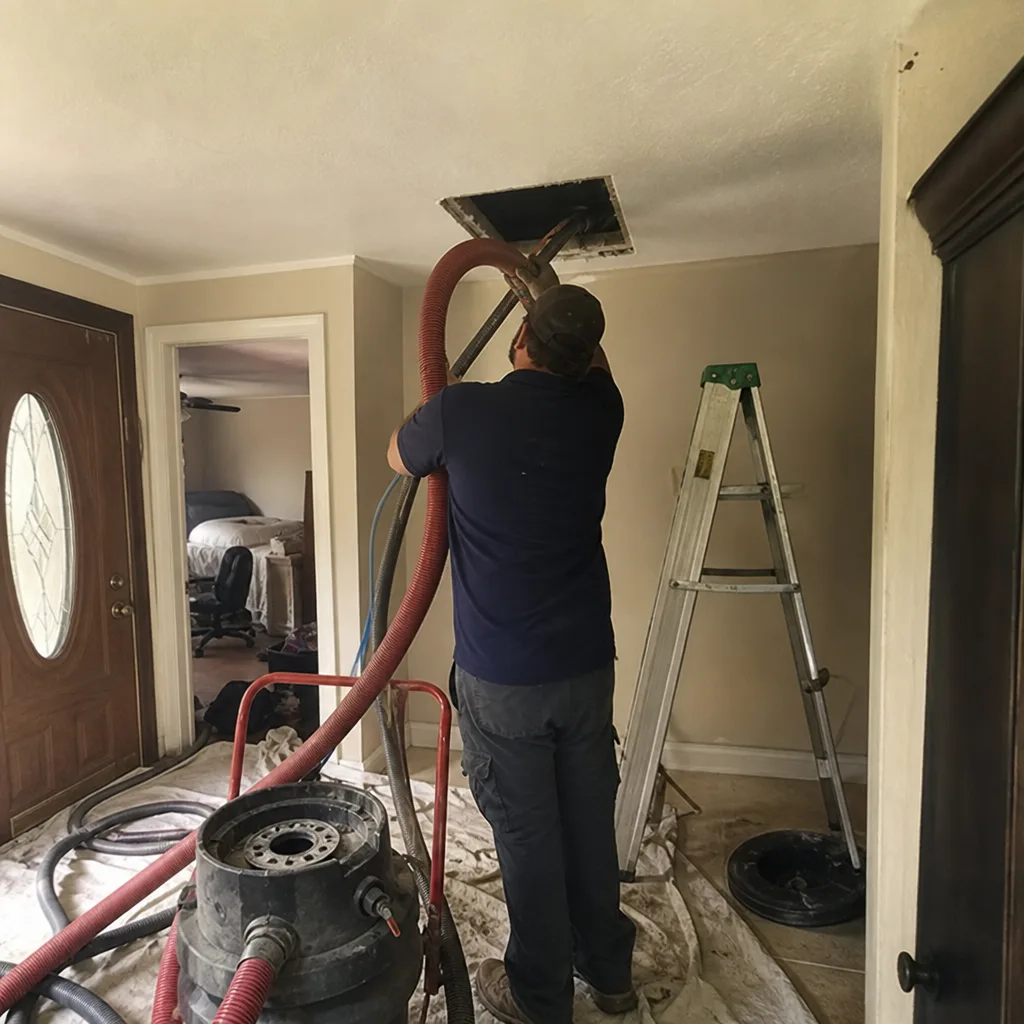 Before
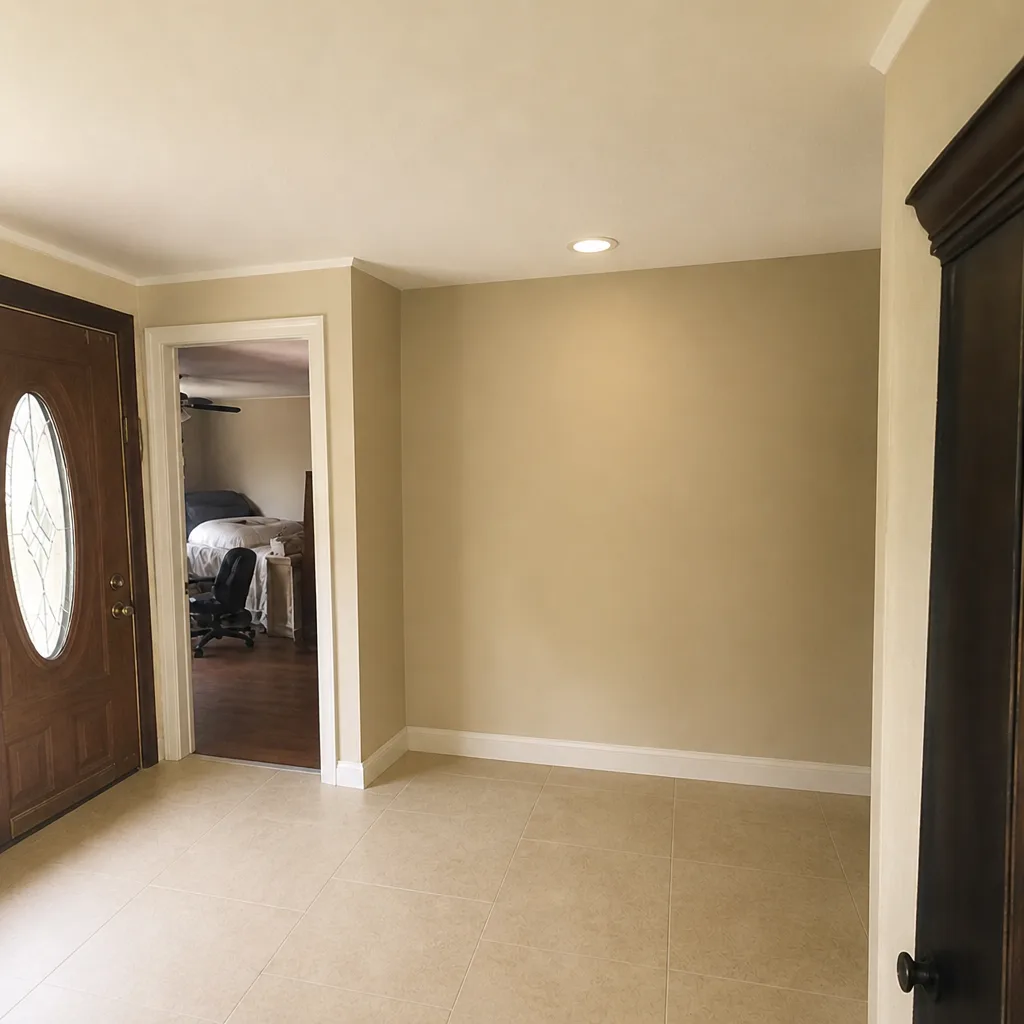 After
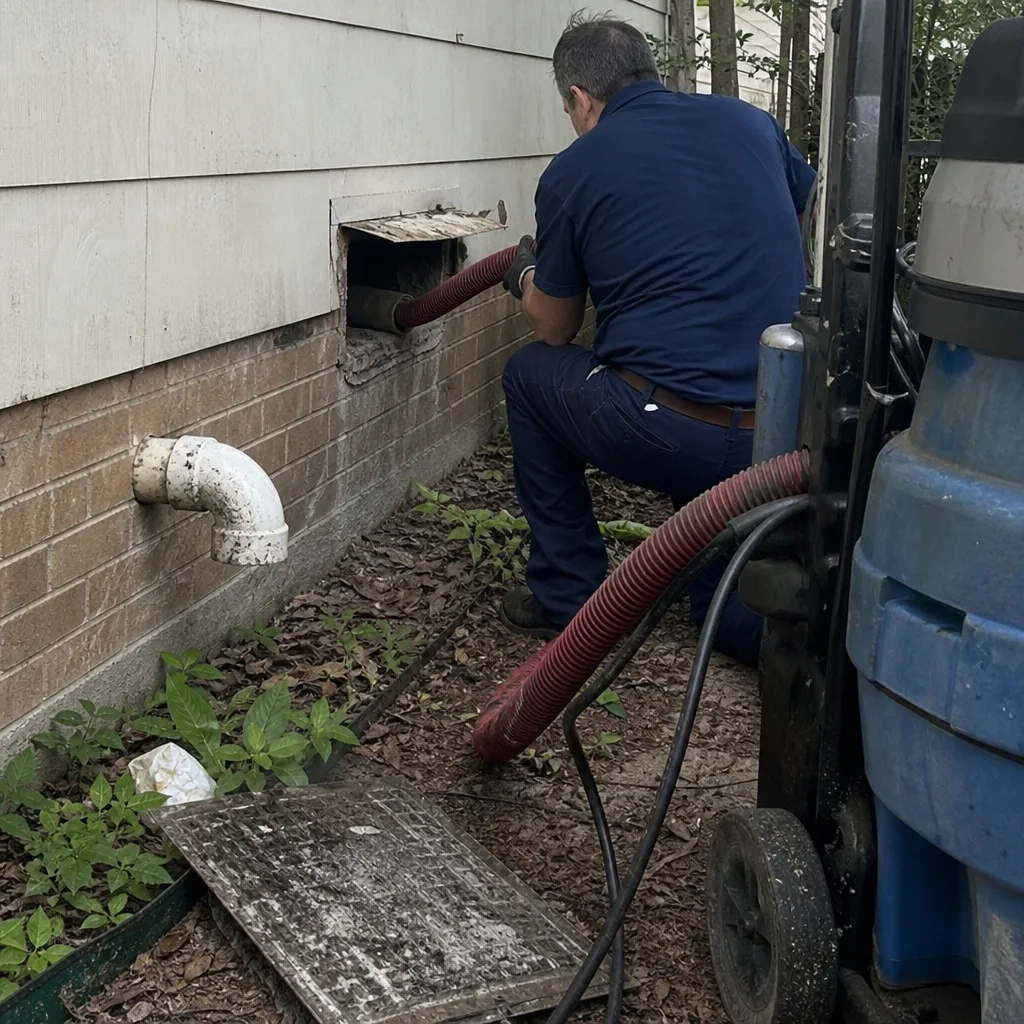 Before
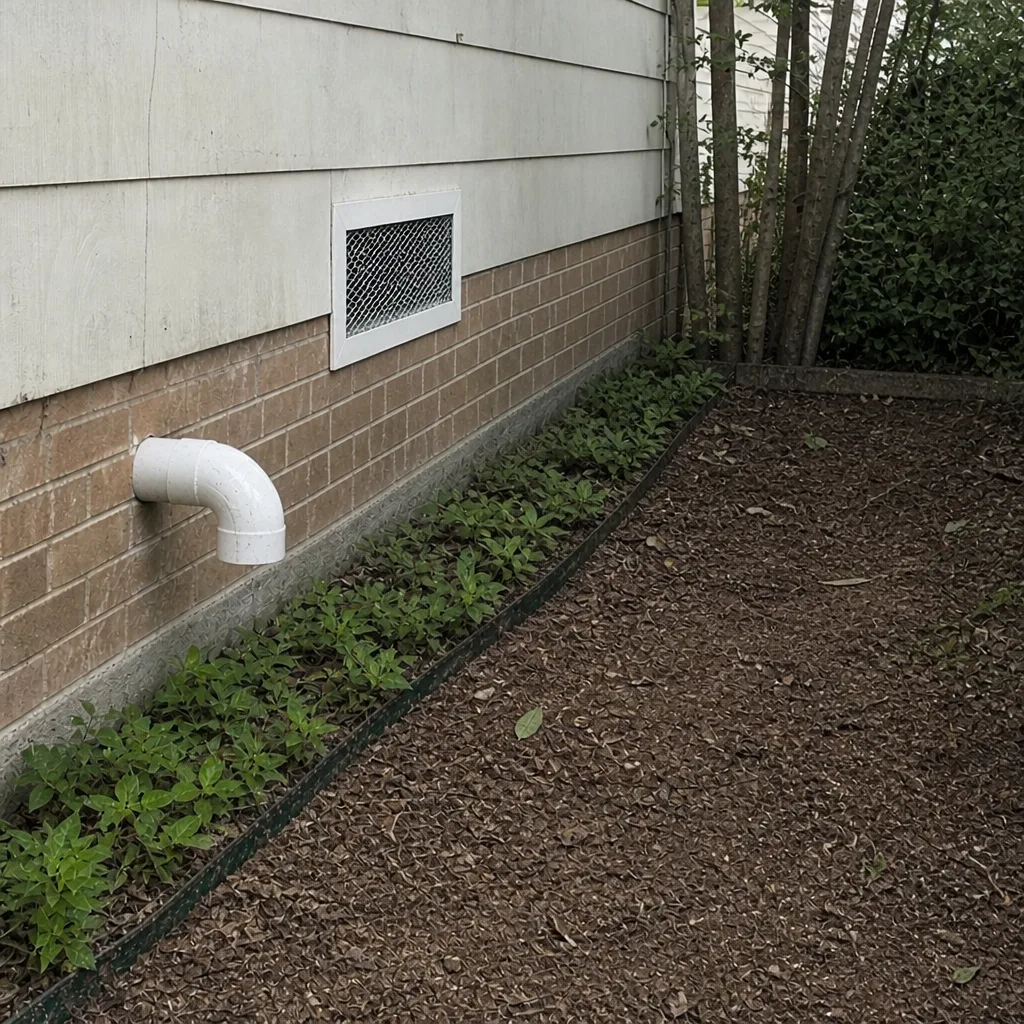 After
When to Call a Professional
Duct cleaning isn’t a “when your house feels dirty” service. It’s a “how long has it been, and what’s changed” service. Call a professional when you’ve just bought a Kingwood home and don’t know the previous owner’s maintenance history. Call after a renovation, especially one that involved cutting or sanding, because construction debris migrates into the ductwork for months. Call when someone in the household has persistent allergy-like symptoms that don’t clear up. Call when you can see debris or growth through a register. Call if your system is moving noticeably less air than it used to, or if your energy bills have crept up without a seasonal explanation. And call if the last cleaning you had done came with a photo folder you never received.
Our technicians have up to 11 years of experience. Kingwood Air Duct Cleaning Co offers free estimates in Kingwood – call (833) 991-7731. We answer 24/7 and dispatch from 7am to 7pm, Sunday through Friday.
Frequently Asked Questions
Whole-system air duct cleaning in Kingwood typically runs in the low hundreds to the mid hundreds of dollars, depending on vent count, system condition, and whether sanitizing, air handler cleaning, or duct sealing is included. Per-vent teaser quotes are not real pricing – they’re reservations for an on-site upsell. Call (833) 991-7731 for a written, flat price per system – estimates are free.
Cheap quotes are cheap because the equipment behind them is cheap: a portable vacuum, a hose, and no containment system. A truck-mounted professional rig and a rotating brush system cost real money, and that shows up in the quote. Very low teaser numbers are the entry point for the bait-and-switch pattern, not a real discount on the same scope.
You know the work was done when you have before-and-after photos of your own ducts and an in-duct camera record of the cleaning. Ask for both. Any legitimate provider delivers them. Anyone who can’t show you the inside of your ducts after the job either didn’t clean them or didn’t bring the camera.
For most Kingwood homes, every three to five years is the honest answer, with an earlier interval after a renovation, a move-in, a new pet, or water intrusion. Houston-area humidity stacks the deck toward mold and biological growth, so homes with existing moisture issues need it more often. The right answer is never a hard rule – it depends on the home, and a real specialist will tell you that.
No. NADCA membership is voluntary, and plenty of capable contractors aren’t members. Use it as a filter alongside the four equipment questions, the written scope, and proof of insurance. On its own, NADCA membership tells you the company trained to a standard; it doesn’t tell you the equipment they’ll bring to your house.
You don’t. The same specialist can handle air duct cleaning, dryer vent cleaning, HVAC cleaning, air quality and sanitizing, and duct repair and sealing together. Grouping the work gets you one scope, one visit, and one flat price per system. If your chosen contractor can only do part of it, that’s a question worth asking before you book.
The liability lands on you. Texas doesn’t issue a single statewide duct cleaning license, so an uninsured contractor’s damage becomes a claim against your homeowner’s policy, which often excludes it. Ask for proof of active general liability insurance before the visit, and confirm the business entity on the certificate matches the contract.
The Bottom Line
Hiring a duct cleaning contractor in Kingwood is a verification exercise, not a shopping decision. Confirm the equipment – Rotobrush, Nikro, or a real truck-mounted rig with Abatement Technologies containment on call for contamination-level jobs. Ask the four questions on the phone. Get a written scope with a vent count, a containment description, and before-and-after photo documentation promised inside it. Check insurance and NADCA membership as filters. And insist on one flat price per system, agreed before any work starts – never a per-vent number, never a teaser coupon. Do those things and the bait-and-switch pattern has nothing to grab onto. Skip them, and you’re a phone number the flyer was written for.
Kingwood Air Duct Cleaning Co works in the full duct and ventilation ecosystem – air duct cleaning, dryer vents, HVAC systems, air quality, and duct repair and sealing – from the duct opening to the air handler. We use professional-grade Rotobrush, Nikro, and Abatement Technologies equipment, and we can recommend and install Honeywell and Aprilaire whole-home air quality systems as part of the same visit. Learn more at Kingwood Air Duct Cleaning Co.
Call (833) 991-7731 for a free estimate. We answer 24/7. Fast dispatch from 7am to 7pm, Sunday through Friday.
Written by the team at Kingwood Air Duct Cleaning Co.